Milton Kahn Lectureship
Milton Kahn
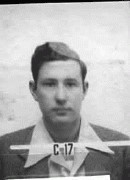 This Lectureship was established in 1980 in honor of Professor Milton Kahn through generous contributions from his family as well as friends.
Milton Kahn was a Chemistry graduate student at the University of California. Kahn focused on Radiochemistry throughout his career. During the Manhattan Project, he studied under Emilio Segrè, at the Los Alamos Laboratory.
After the war, Kahn published numerous academic papers. In 1948, he became an Assistant Professor of Chemistry at the University of New Mexico. He was promoted to a Professor in 1958.
In 1980, UNM established the Milton Kahn Endowed Lecture Series in Chemistry to honor Milton’s legacy, and to allow a current Chemist to present research.
Professor Kahn had a distinguished research career centered in radiochemistry. He was a much beloved teacher, mentor and friend to many students and colleagues over 32 years of service to UNM.
2025 Recipient Professor Sossina M. Haile - 12th Annual

Sossina M. Haile has been the Walter P. Murphy Professor of Materials Science and Engineering at Northwestern University since 2015. Previously she served 18 years on the faculty at the California Institute of Technology. Dr. Haile earned her Ph.D. in Materials Science and Engineering from the MIT in 1992. She is a fellow of the Materials Research Society, the American Ceramics Society, the Electrochemical Society, the Royal Society of Chemistry, the African Academy of Sciences, and the Ethiopian Academy of Sciences. She serves on the DOE Basic Energy Sciences Advisory Board and on the editorial boards of Joule and MRS Energy and Sustainability. She also directs the DOE Energy Frontier Research Center, Hydrogen in Energy and Information Sciences (HEISs) and is a Hans Fischer Senior Fellow at the Technical University of Munich. Haile’s research broadly encompasses materials for sustainable electrochemical energy technologies. Amongst her many awards, in 2008 Haile received an American Competitiveness and Innovation (ACI) Fellowship from the NSF. In 2010 Haile was the recipient of the Chemical Pioneer Award, in 2012 the International Ceramics Prize (World Academy of Ceramics), and in 2020 the Turnbull Lectureship (Materials Research Society). Haile is also a board member of the non-profit Ethiopia Education Initiatives, which aims to bring educational opportunities to an underserved region of the world.
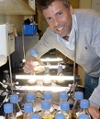
Dr. Greg Scholes, the William S. Tod Professor of Chemistry, Department of Chemistry, Princeton University, Princeton, NJ
Dr. Gregory D. Scholes received his B.Sc. in Chemistry in 1990 and his Ph.D. in Physical Chemistry in 1994 from the University of Melbourne.
Presently, Dr. Scholes is the William S. Tod Professor of Chemistry and the Principal Investigator for the Scholes Group at Princeton University, Princeton, NJ.
Dr. Scholes is an expert on electronic energy transfer and molecular excitons. Current research in the Scholes Group concerns design principles and paradigms for directing and regulating light-initiated energy flow in man-made and natural systems, like proteins involved in photosynthesis. A goal is to learn new ways to harness the power of light in chemistry. The Scholes Group combines ultrafast laser spectroscopies—methods such as 2D electronic spectroscopy—with theoretical studies to understand mechanisms of light harvesting, electron transfer, and other photo-initiated processes.
In 2010, the group reported that fragile quantum mechanical processes are detected even at physiological temperature in the primary light-harvesting proteins of algae. This work inspired new research in areas ranging from theoretical quantum physics to chemical dynamics to biology and has been highlighted in magazines including New Scientist (2010, 2011), Wired (2010, 2011), Scientific American (2009, 2010), Science News (2010, 2011), Nature (2011), Focus (2012), Cosmos (2014); national radio (CBC Quirks and Quarks and BBC Science in Action); and television documentaries such as Invisible Nature (Discovery Channel).
Recent work includes development of more revealing metrics for exciton size (delocalization) and several experimental studies of vibrational wavepackets; how they can be characterized, and what they can tell us about electronically coupled molecules and dynamics.
Some of Dr. Scholes honors include:
- The Masuhara Lectureship Award, Asian Photochemical Conference (2016)
- Beijing Institute of Technology Adjunct Professor, China (2016)
- Honorary Professor at Central South University, China (2017)
- The Swiss Chemical Society Lectureship (2016)
- Senior Fellow, CIFAR Biology, Energy, Technology Program (2015)
- Fellow, Royal Society of Chemistry (United Kingdom)
- The NSERC John C. Polanyi Award (2013)
- The Royal Society of Chemistry Bourke Award (2012)
- The Raymond and Beverly Sackler Prize in Physical Sciences (Tel Aviv University) [2011]
- The Royal Society of Canada Rutherford Memorial Medal in Chemistry (2007)
- The Chemical Institute of Canada Keith Laidler Award (2006)
- The Research Innovation Award (Research Corporation) [2002]
- The Premier’s Research Excellence Award (2000)
For more information on Dr. Scholes check out his group’s website.
Yale University
Stanford University
University of California
University of Virginia
Harvard University
Northwestern University
University of Texas in Austin
University of Minnesota
National Renewable Energy Laboratory/University of Colorado Boulder
Northwestern University